Meet the Vocation Director
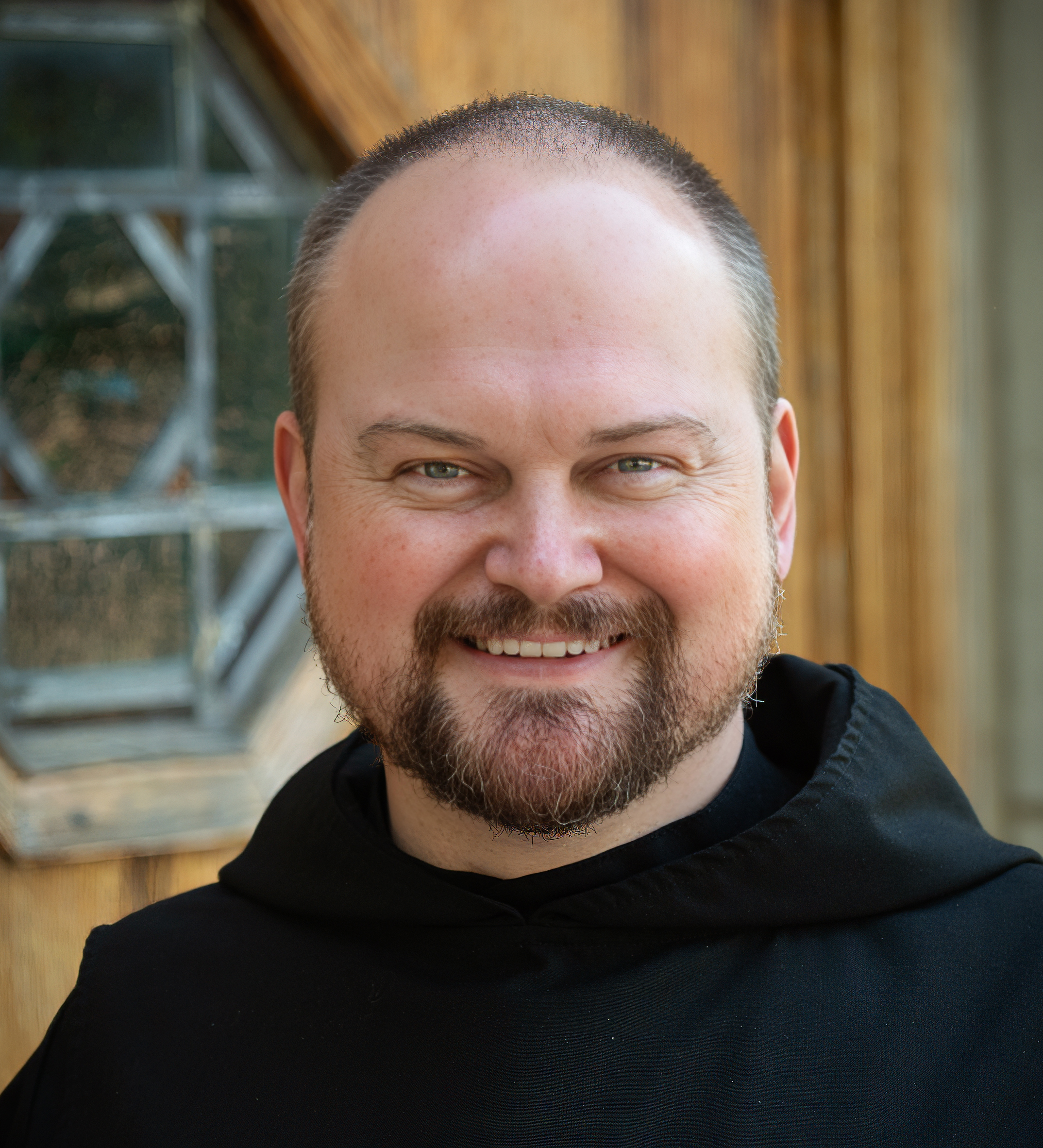 Fr. Simeon made monastic profession on January 6, 2010, and was ordained to the priesthood on May 31, 2014. He frequently provides pastoral assistance at parishes around Oklahoma on the weekends, and as a popular speaker at the Archdiocesan Catholic Summer Youth Camp at Our Lady of Guadalupe Camp and at parish youth groups. He currently serves the community as Vocation Director.
For more information on the Vocation Program at St. Gregory's, contact:
Fr. Simeon Spitz, O.S.B.
Vocation Director
Office: 405-878-5456
E-mail: This email address is being protected from spambots. You need JavaScript enabled to view it.
Monastic Encounter Weekends
The voice of God is always calling but too few are able and willing to listen. In his 6th century Rule for monasteries, St. Benedict outlines a way of life that teaches one to listen with the ear of the heart and to daily translate into action God’s holy teachings so that in all things God may be glorified. To hear the voice of God clearly, one must be prepared to receive it. St. Benedict offers a disciplined way of prayer and work, of obedience and stability, and of ongoing conversion to prepare the hearts of his monks to encounter the God whom they seek. His monks seek God in solitude, but they do not seek Him alone. Rather, they seek him in the company of their brothers who encourage and support them along their way. Within the enclosure of the monastery, they journey together to God who is always near to those who call upon Him.
St. Gregory’s Abbey invites single Catholic men ages 18-45, behind the cloister gate for a monastic encounter. During this time, you will share in the liturgical prayer, lectio divina, common work, and communal life of the abbey and live as a monk, if only for a weekend. While these encounters are primarily intended for those discerning a religious vocation, they are of spiritual benefit to anyone yearning to know God’s still, small voice amidst life’s chaos.
Click below to schedule a visit.
For more information contact
Fr. Simeon Spitz, O.S.B.
405.878.5456
This email address is being protected from spambots. You need JavaScript enabled to view it. www.monksok.org/vocations
What is more delightful than this voice of the Lord calling to us.
+ St. Benedict (RB: Prologue)
Becoming a Monk
Period of Inquiry
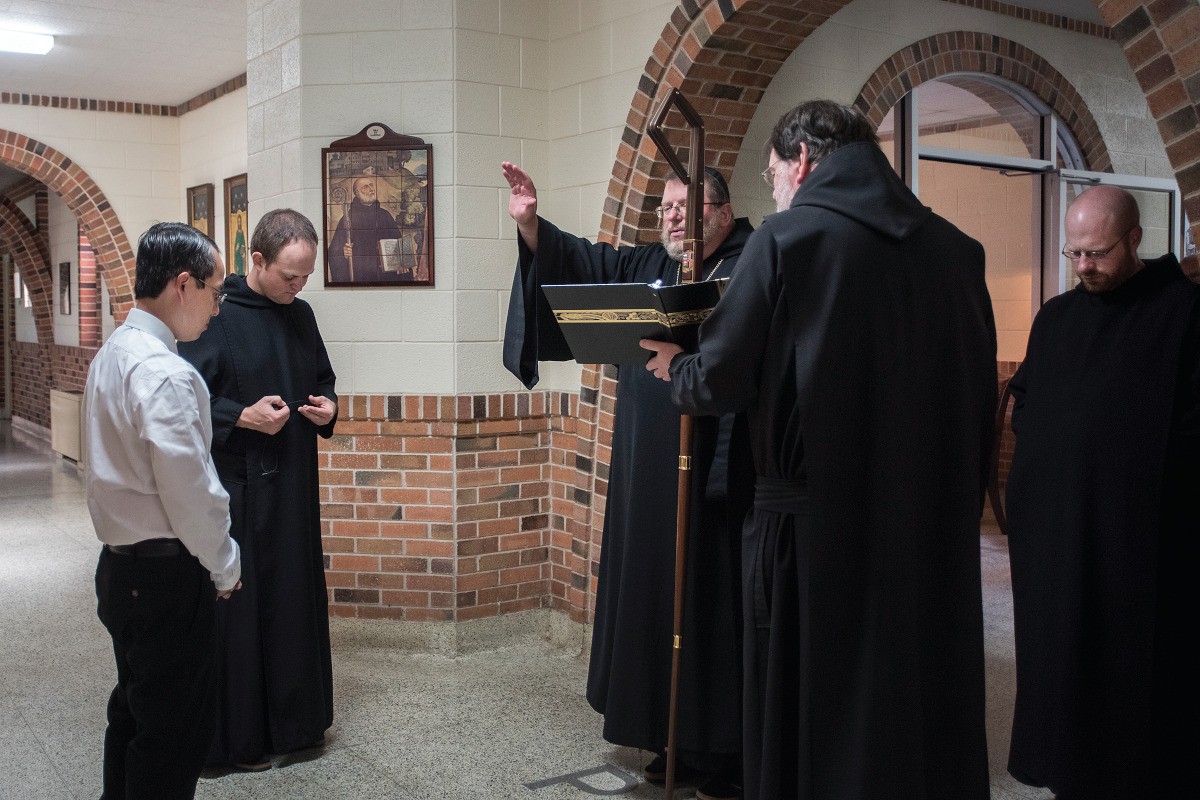
This process of discernment begins with a period in which the inquirer and the community can become acquainted. Through conversations with the Vocation Director and the Abbot, the inquirer will ask basic questions about monasticism and Benedictine spirituality to determine if this seems to be the lifestyle in which he will dedicate himself to God. During this time, the inquirer is invited by the vocation director to share occasionally in the prayer, work, and other aspects of the life of the community. As the inquirer and the Vocation Director develop a clearer understanding of the monastic life at St. Gregory's, he will be invited to spend a few days at the monastery. During such a visit, the inquirer joins in our common life, including prayers, meals, work and recreation. Such visits may be repeated, depending on the course of dialogue with the Vocation Director. Pictured to the left are men joining in a work project during a "monastic experience" retreat.
Postulancy
If after either a period of inquiry or through an experience as an observer the candidate and the Vocation Director discern that he appears to be called to our community, he may apply for admission as a Postulant. Postulancy lasts approximately two months, and can be extended up to six months. Postulancy serves as a focused period of vocational discernment and experience of our life at St. Gregory's. The postulant lives in the monastery, participates fully in the common life of the community, and meets regularly with the Vocation Director to discuss his unfolding vocation. In reviewing applications to the Postulancy, the Vocation Director and Senior Council reflect on the criteria described in the Rule of St. Benedict: if the applicant truly seeks God, if he is attracted to the common prayer, and if he is suited for a life shared closely with this group of men, a life in which he will have to make adaptations and contribute in his way to common work and life. The attitude of one applying for postulancy and eventually novitiate need not be one of certainty that this is the life to which he is called. His attitude should, however, be more than "giving it a try." Entrance to the postulancy and the novitiate should be a sincere attempt to determine if this is indeed the path to which God is calling him, by testing that call in the surest way possible: living the life. Since the life of a monk is a vocational lifestyle and not simply a job, there are very few specific qualifications for an applicant's suitability for the life. Most of these are based on a clear understanding of the nature of the life, physical and psychological ability to live a communal life, and a sincere desire to seek God and to serve others.
The applicant should be at least two years out of high school, either in college or at work. Due to the demands of communal living, we engage in careful examination of older candidates to determine if they are free from a rigidity that would make it difficult for them to adapt to the life of the monastery. While the same applies to younger candidates, experience has shown that older candidates have a difficult time in adjusting well. For this reason, men over the age of 45 are not readily encouraged to apply to our community. The applicant should be a practicing Catholic of at least three years' standing. His personal life and history should exhibit elements of stability, a sincere attempt to seek God, and emotional balance. He should show some promise of contributing to the work of the community. The applicant must be debt-free. An exception may be made for student loans. Postulants may be covered by abbey health insurance. Near the end of this period, the Postulant may make formal request to be admitted to the novitiate. Along with a formal letter requesting admission to a particular novitiate, the applicant meets with the Senior Council for an interview. The abbot, with the recommendation of the Vocation Director and the Senior Council, submits the application for admission to the Abbey Chapter for approval.
Novitiate
The novitiate lasts one year. At the beginning of the novitiate, the abbot vests the novice in a habit and assigns the novice a "monastic name." During the novitiate, novices share in the common life of the community and engage in basic study of the monastic vocation. Under the guidance of the Formation Director, the novice develops those basic skills and tools needed to live the life fruitfully.